
What is Restorative Practices Coaching?
Part One of a Three Part Series on Restorative Practices Coaching
After an inspiring Restorative Practices (RP) training, people head back to school energized and excited to implement their new skills. However, the competing priorities of daily routines make it easy to fall back into old habits and ways. Luckily, there are many ways to keep the RP momentum going!
What are some ways schools can build buy-in and capacity for Restorative Practices?
Set up a Professional Learning Community (PLC) to keep the learning and practices front and center
Add a check-in or follow-up about the training during team planning or meeting times
Open a team meeting with a round question like: What is one way that you have used the Restorative Questions since returning from training?
These ideas not only keep the new learning top of mind, they also provide for the sharing of ideas and collaboration around how to incorporate the new skills. They’re also all things schools can do with their staff and resources on hand. But sometimes a school needs help, and that’s where coaching comes in. Many schools build coaching into their post-training implementation plan.
What does Restorative Practices coaching look like?
Coaching is where deep learning really takes place. It has to be flexible in order to meet the needs of the people implementing Restorative Practices in their individual settings. For example, our coaching sessions this school year have included:
Virtual and in person sessions
Individual teacher consults
Meetings with teacher or administration teams
Observations followed by feedback
Thought partnership
Structured implementation conversations
Circle planning assistance
Circle facilitation to model the practice
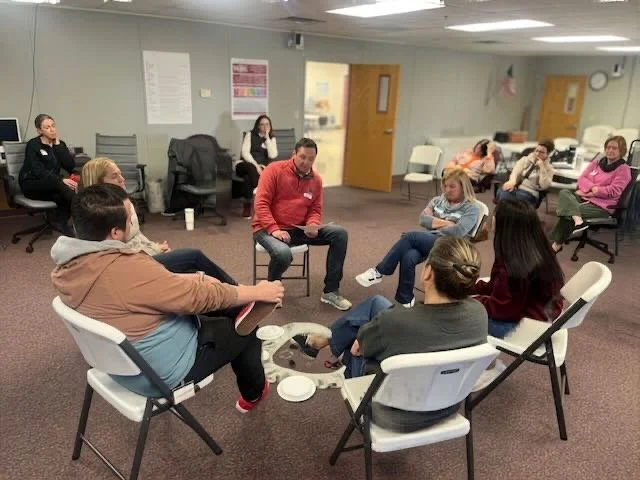
Our belief is that coaching sessions should model restorative approaches. Through a “power with” approach, we meet in circles, use a talking piece in order to hear from all voices, use reflective listening, tap into the strengths of the school and staff to grapple with challenges and solve problems, and honor the deep connection to—and staff knowledge of—the school culture to determine a path forward.
Good coaching meets the unique needs of each school. By collaborating to create a customized coaching plan, together we format sessions and set agendas that will work best. A good coaching session should allow for all participants to be fully present, which is especially hard in a school! In order to support busy educators with so many priorities competing for their attention, we provide follow up notes along with personalized resources that can be referred back to. And we are always available to respond to questions via email. Restorative Practices are first and foremost about building strong trusting relationships and that is what we aim to do with each school or organization that we work with. We forge working partnerships that balance the relational nature of this work with the reality of contracts and financial obligations.
What should I look for in a good Restorative Practices coach?
Systems-Level Thinking: The coach should have an ability to work with leaders to create sustainable, school-wide or organizational change.
Proactive Focus: The coach should have experience implementing proactive Restorative Practices such as community-building circles to create positive school culture and reduce the need for responsive discipline practices.
"With" Mindset: The coach should be skilled at working with people by identifying and capitalizing on strengths and providing support and encouragement
Focus on Equity: The coach should have the ability to apply an equity lens in order to identify and address systemic issues in school practices, including behavior management and discipline.
Relevant Experience:
The coach should have experience working with diverse stakeholders including: administrators, teachers, staff, students, and parents.
The coach should have experience facilitating all tiers of restorative practices including: Community Building Circles, Affective Statements–using non-violent communication, Restorative Questions to manage and de-escalate behavior, Restorative Conferencing to address serious harm.
Adaptability: The coach should have the ability to address questions, concerns, and needs in real time or identify and provide resources.
What should I look for in a good Restorative Practices coaching session?
Modeling Practices: The coach will use restorative approaches.
Capacity Building: The coach will focus on empowering staff to take over restorative roles.
Reflective Process: The coach will help navigate complex dilemmas with a focus on empathy and root causes.
Documentation & Organization: The coach will provide prompt, clear documentation of feedback, including resources.
How do I find a Restorative Practices coach?
Good news! If you’ve read this far, we might be just what you’re looking for. P2RC offers coaching virtually and in person in the Boston, MA area. We would be delighted to talk with you to see how our coaching services can help you. Contact us today.
Read Part Two in our three part series on Restorative Practices coaching: Supporting Tier 3 Practices: Restorative Conferencing