Restorative Practices Coaching: Making Implementation Last
Part Three of a Three Part Series on Restorative Practices Coaching
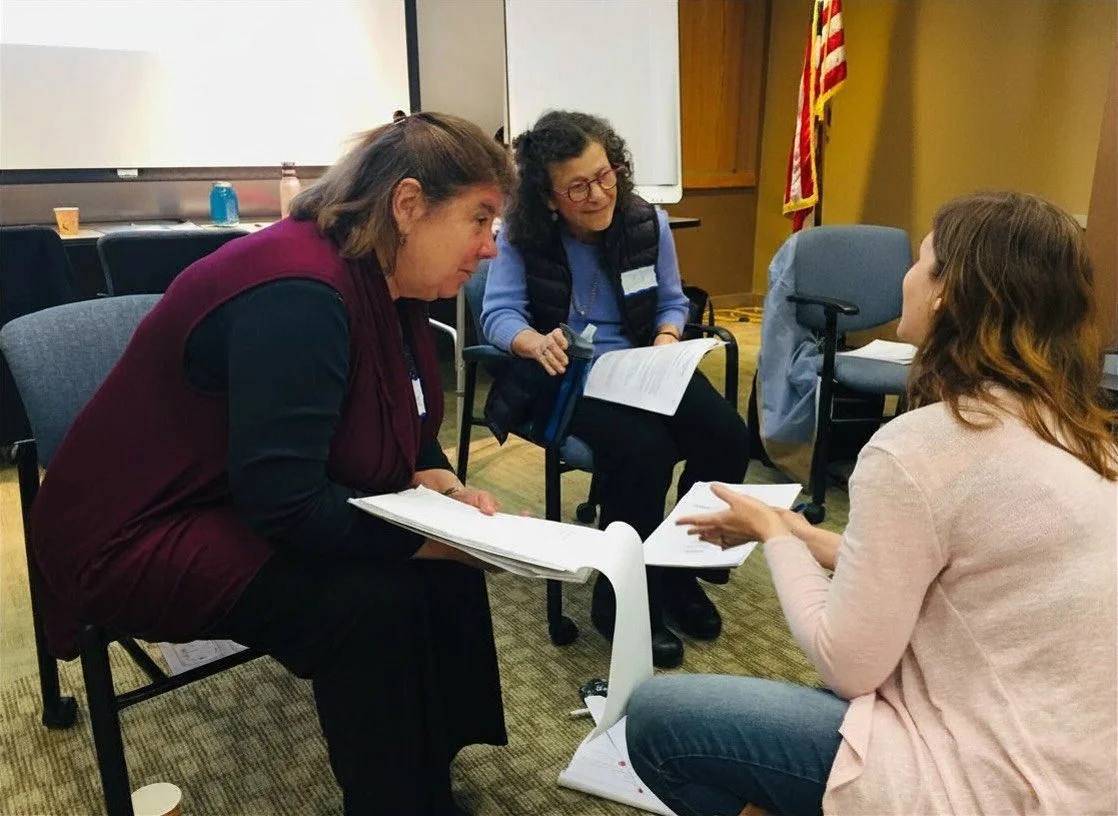
Part Three, our final installment on coaching, highlights coaching’s vital role in Implementation, arguably the most important — and least addressed — aspect of using Restorative Practices in a school setting. In case you missed it, Part One of our series on Restorative Coaching shared the benefits of using coaching to complement Restorative Justice Practices training. Part Two outlined some of the themes and challenges that came up in Tier 3 (Conferencing) coaching over the past few months.
Implementation
Coaching includes exploring questions related to implementation. Educators often naturally align with a restorative mindset and can easily imagine the benefit of adding certain practices, but that doesn’t always lead to smooth adoption of Restorative Practices. Barriers to implementation include:
school culture
differences in values
schedules and space
buy-in among stakeholders
…and so many others!
These barriers are usually based in the logistics of working within a system that has to shift in many ways in order for the practices to be fully implemented.
We support implementation by asking questions for small groups to discuss within a structured conversation.
There is not one right path, nor even a straight path, to implementation! Full implementation of Restorative Practices can take up to 7 years. Throughout the implementation process we come back to these questions again and again. Here is a glimpse at one implementation conversation we held with a school piloting RP in a specific program:
What part(s) of this process already exist in your current procedures & protocols?
→ The program is in one location, all teachers are trained, and there is administrative support to work through incidents with a restorative lens as part of the approach.
→ Deans and counselors serve as go-betweens for the teacher running a restorative process and teachers who may need to dismiss a student for a conversation or circle.
→ Administrators have fully bought in and are actively supporting restorative responses.
What is a part of this process that doesn’t currently exist that feels easy (or sensible) to add immediately?
→ Add a follow-up circle after the initial circle to review the repair agreement and make sure everyone is satisfied.
The group grappled with how to add follow-up circles and decided that anyone facilitating or involved in a restorative process can be responsible for follow up.
The principal offered support for those doing restorative pre-conferences and conferences by providing personnel to cover classes.
What part of this process doesn’t feel relevant or doable right now?
→ Taking long stretches of time to resolve an issue; the threat of escalation due to social media posts, etc. increases the urgency to address and resolve things more quickly.
The group agreed to try addressing incidents quickly to de-escalate. Then, they would come back to an issue or incident when needed for additional conversations and/or repair.
What part(s) of the process feel relevant but need more time, training, planning, or practice to implement?
→ Empowering classroom teachers to address issues with students using Restorative Questions and approaches; their last training was several years ago; many feel unprepared to have these kinds of conversations.
Some ideas we discussed to empower teachers were:
Create PLCs around Restorative Practices.
Use circles in faculty and team meetings. Being in a circle is the best way to get better at circles and support a restorative mindset school-wide.
Provide training for new faculty as needed.
Restorative Practices represent a paradigm shift that is very different from how most people working in schools experienced school.
In many ways Restorative Practices are antithetical to how school systems function. Implementing Restorative Practices is not a “one and done” training; becoming a restorative school requires:
a programmatic and financial commitment
time and a willingness to try new ideas
time to process and assess how implementation is going
permission to make changes and try again
It is not easy. It is messy. It requires creativity. It requires teamwork.
We love when we are invited to be a part of the team that is grappling with how to effectively build a school culture where everyone is valued, treated with dignity, and able to thrive.
Email us or schedule a quick call about a coaching session!