
Circles
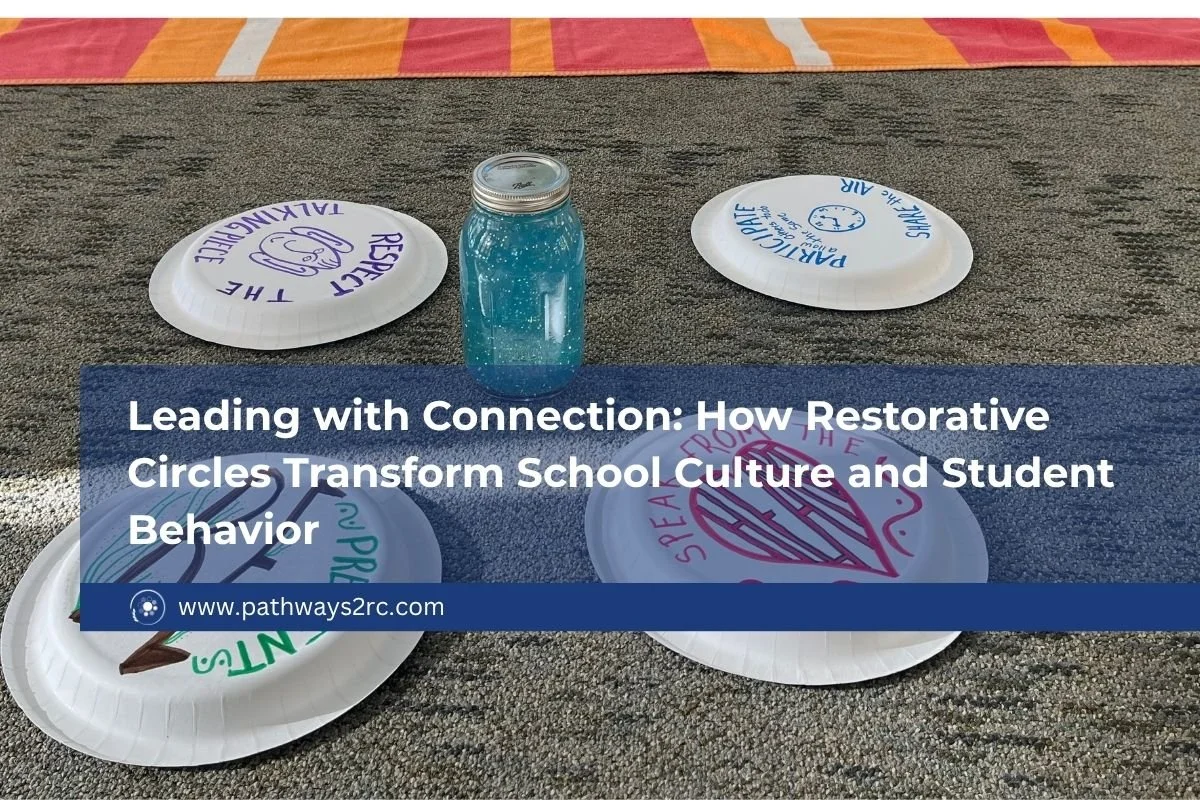
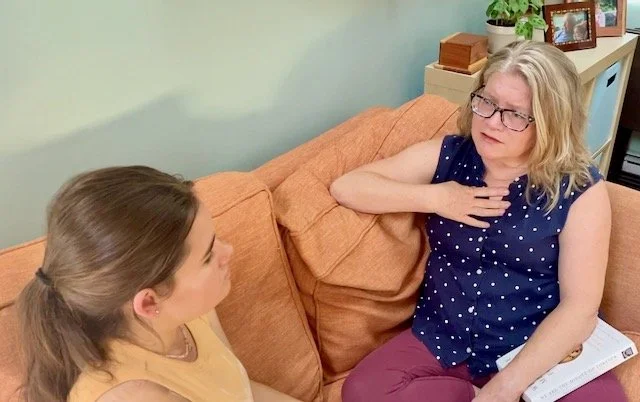
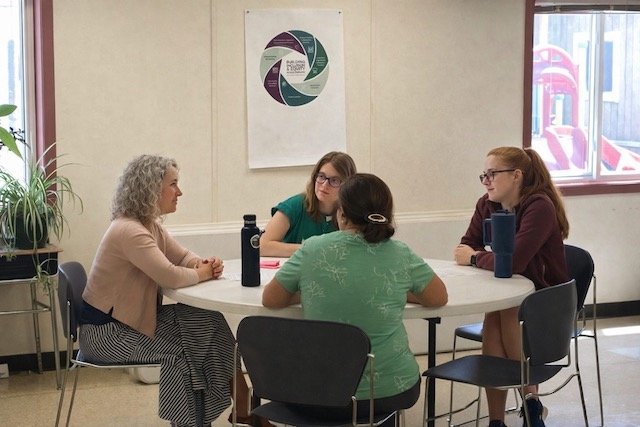
A circle is a different way of having a conversation. Participants sit in a circle, use a talking piece, and follow agreed upon guidelines with a focus by everyone on a single idea or question.
Why We Use Circles
Circles create a safe environment for everyone to participate in a structured way, particularly those who have been marginalized or might not typically speak up. Circles slow down conversations so we can really listen to each other creating an opportunity to share and hear new perspectives, build understanding, solve problems, and create community.
“Community Building Circles created an environment where students and staff could build unique relationships that allowed barriers to be broken down and meaningful change to happen within the school.”
Circle Practice incorporates three key elements:
The talking piece: to make clear who has permission to speak
The guidelines: created by the group to set expectations for behavior
The keeper: a facilitator for the process who is also a member of the group
Community Building and Academic Circles teach and provide practice in relationship-building, perspective-taking, and other social-emotional skills vital to learning content and being in community.
Conference Circles lean on the skills learned in Community Building and Academic Circles to repair harm and restore relationships when needed.
For a full description of the Circle Process, download our guide.
Reflections on Circles
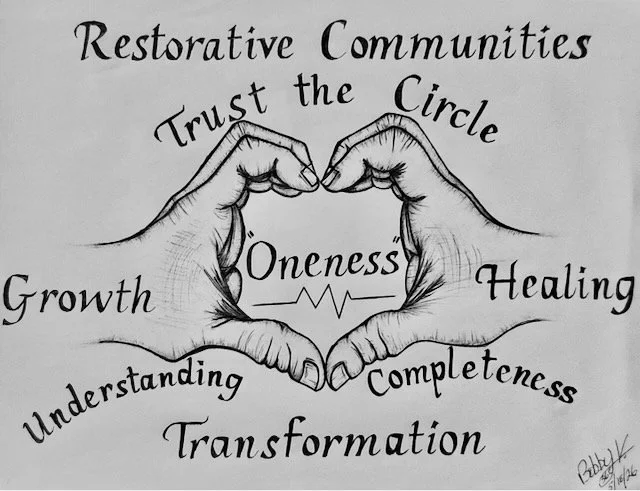
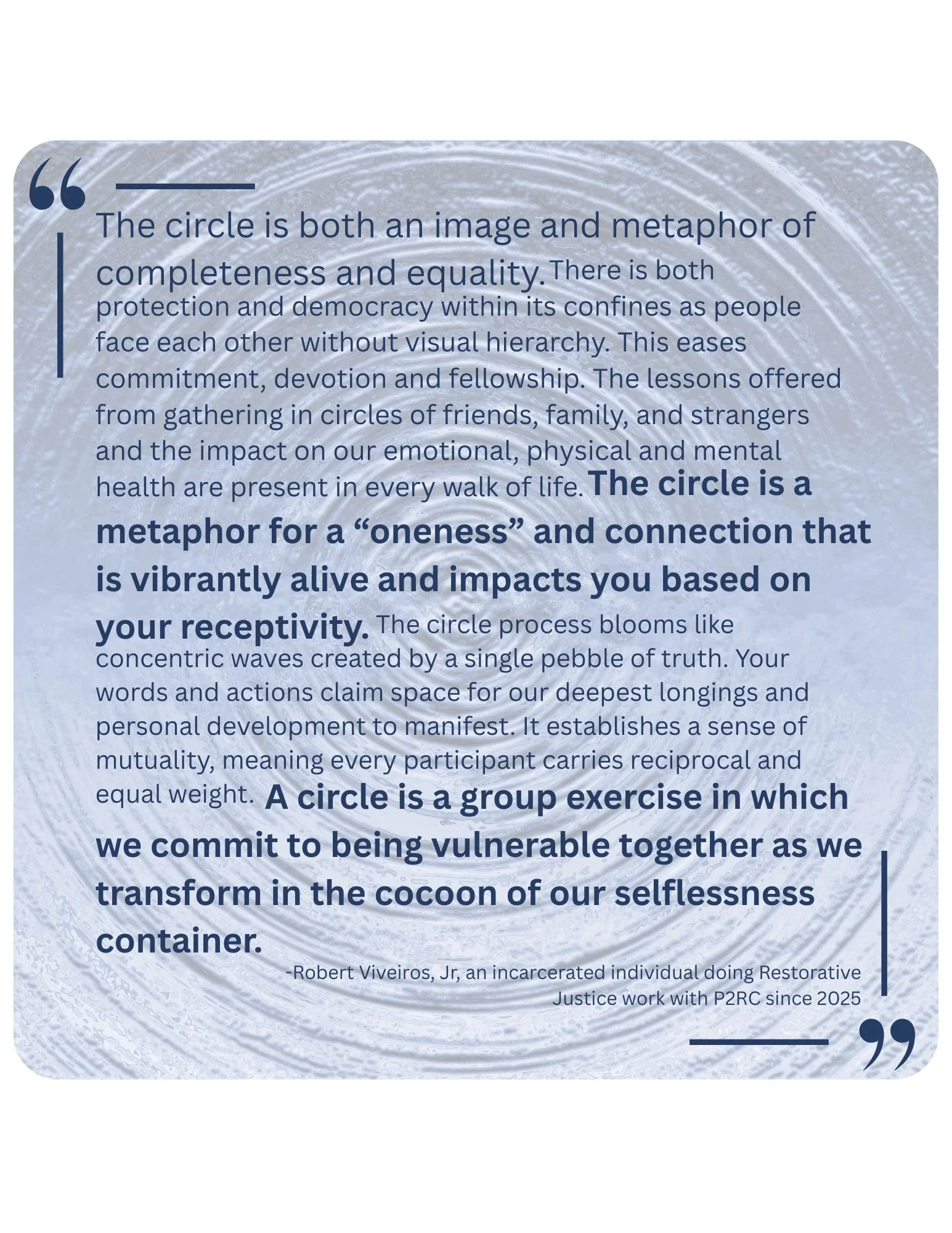
We’ve been working with a group of incarcerated men who are exploring paths to forgiveness for themselves, compassion and care for each other, and the power of the Circle to build community, connection, and belonging. Here we share the words and an illustration inspired by being in Circle from Bobby.
Indigenous communities around the world have been using RJ and RP consistently throughout time. You can learn more about the Indigenous history that lies behind what is now known as RJ on our Land Acknowledgement page. Across the United States and in other parts of the world, Restorative Justice and Restorative Practices are being utilized in schools, police departments, courts, prisons, and in communities. New Zealand and Canada have adopted RJ and RP widely. California, Colorado, Minnesota and Massachusetts are among many states using both RJ and RP in the US.
Where are circles happening?
Read more about Circles in our blog
We can all agree that community building circles are best done in person, where we can easily note non-verbal cues, “read the room” as we answer prompts, and physically touch the talking piece. That being said, it is entirely possible to hold engaging, warm, and relational community building circles online.